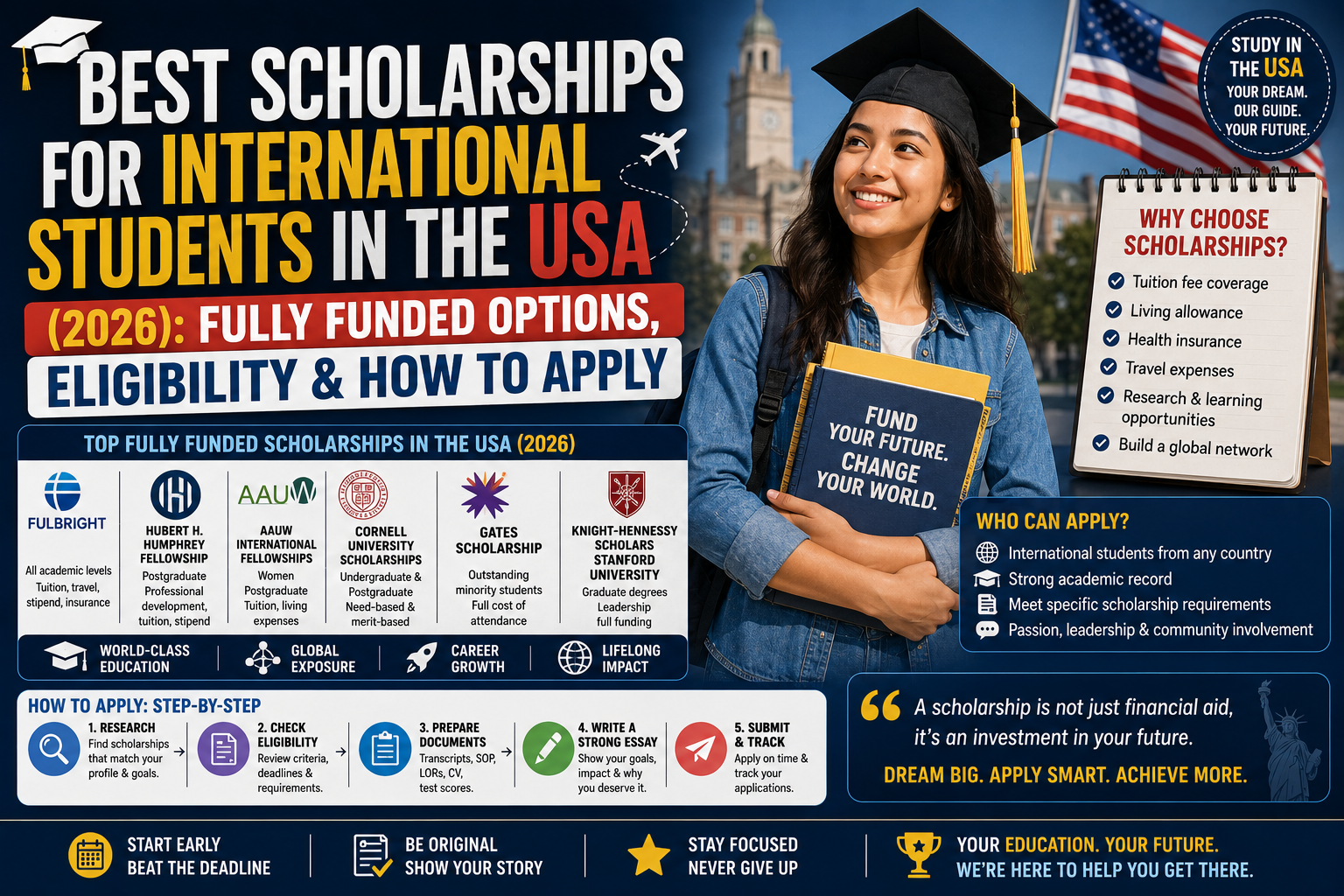
Studying in the United States is a dream for hundreds of thousands of international students every year — but with average tuition fees ranging from $25,000 to over $60,000 annually at many universities, cost remains the biggest barrier for most applicants. Fortunately, U.S. universities, government programs, and private organizations offer a wide range of scholarships specifically designed to help international students fund their education, some of them covering tuition, housing, and living expenses in full.
This 2026 guide breaks down the best scholarship opportunities available to international students in the USA, how eligibility works, application timelines, and practical tips to strengthen your chances of winning funding.
Why Scholarships Matter for International Students
Unlike domestic students, international students are generally not eligible for U.S. federal financial aid (such as FAFSA-based grants or loans). This makes scholarships one of the only reliable ways to significantly reduce the cost of studying in the U.S. Scholarships can come from:
- The university itself (institutional scholarships)
- The U.S. government (for select academic and cultural exchange programs)
- Private foundations and nonprofit organizations
- Corporate-sponsored scholarship programs
- Home-country government sponsorships for students studying abroad
Understanding which category fits your situation is the first step toward building a strong scholarship strategy.
Types of Scholarships Available in the USA
1. Merit-Based Scholarships
Awarded based on academic achievement, standardized test scores (SAT/ACT/GRE/GMAT), leadership experience, or extracurricular accomplishments. Many top universities automatically consider applicants for merit scholarships during the regular admissions process, without requiring a separate application.
2. Need-Based Scholarships
Awarded based on demonstrated financial need. While international students have more limited access to need-based aid compared to domestic students, a number of top-tier universities are “need-blind” or “need-aware” for international applicants and offer generous need-based packages.
3. Fully Funded Scholarships
These prestigious scholarships cover tuition, housing, health insurance, and sometimes even flights and living stipends. They are highly competitive but life-changing for recipients.
4. Subject-Specific Scholarships
Offered by departments, professional associations, or foundations focused on specific fields such as engineering, business, healthcare, or the arts.
5. Country-Specific Scholarships
Some scholarships are designed specifically for students from particular regions or countries, often funded by government exchange programs or bilateral education agreements.
Top Fully Funded Scholarship Programs for International Students (2026)
Fulbright Foreign Student Program
One of the most prestigious scholarship programs in the world, the Fulbright program funds graduate-level study, research, and teaching opportunities in the U.S. for students from over 160 countries. It typically covers tuition, airfare, a living stipend, and health insurance.
- Eligibility: Varies by country; generally requires a completed undergraduate degree and strong academic record
- Application: Through the Fulbright commission or U.S. embassy in the applicant’s home country
Hubert H. Humphrey Fellowship Program
Designed for experienced professionals rather than traditional students, this program funds a year of non-degree graduate study and professional development at top U.S. universities.
AAUW International Fellowships
Offered by the American Association of University Women, this program supports women pursuing graduate or postdoctoral study in the U.S., covering tuition and related expenses.
University-Specific Full-Ride Scholarships
Several top U.S. universities offer full-ride scholarships specifically for international students, including need-blind admissions policies at institutions such as Harvard, Yale, Princeton, MIT, and Amherst College, where admitted international students can receive financial aid covering full demonstrated need regardless of citizenship.
Merit-Based Scholarships Worth Applying For
Many universities offer substantial merit scholarships to international students without requiring a separate application — admission itself is often the deciding factor. Examples include:
- Presidential and Trustee Scholarships at various state and private universities, often covering 50–100% of tuition for high-achieving applicants
- Departmental scholarships awarded by specific academic departments based on outstanding application materials
- Honors college scholarships, available at many public universities, often bundling scholarship funding with smaller class sizes and enhanced academic resources
Since these scholarships vary significantly by university, checking each target school’s international admissions and financial aid page is essential.
Scholarships for Specific Fields of Study
STEM Scholarships
Numerous scholarships target students pursuing degrees in Science, Technology, Engineering, and Mathematics, often funded by industry partnerships, professional engineering associations, or university-specific STEM initiatives.
Business and MBA Scholarships
Leading business schools offer competitive scholarships for international MBA candidates, often based on leadership potential, work experience, and demonstrated impact in their home communities.
Arts and Humanities Scholarships
Smaller but meaningful scholarships exist for students pursuing degrees in fine arts, literature, music, and humanities, often awarded through university departments or private foundations supporting the arts.
Eligibility Requirements: What Universities and Programs Look For
While specific requirements vary by scholarship, most international scholarship programs evaluate candidates based on:
- Academic performance (GPA, class rank, standardized test scores)
- English language proficiency (TOEFL, IELTS, or Duolingo English Test scores)
- Leadership and extracurricular involvement
- A strong personal statement or essay demonstrating goals, motivation, and fit
- Letters of recommendation from teachers, professors, or professional mentors
- Financial need documentation, for need-based programs
- Field-specific achievements, such as research experience, portfolios, or competition awards, depending on the program
How to Apply: Step-by-Step Strategy
Step 1: Research Early
Start researching scholarship opportunities at least 12–18 months before your intended enrollment date. Many prestigious scholarships have early deadlines that fall well before general university application deadlines.
Step 2: Create a Scholarship Tracking Sheet
Organize scholarships by deadline, eligibility requirements, and required documents to avoid missing critical dates.
Step 3: Strengthen Your Academic Profile
Focus on maintaining strong grades, pursuing leadership roles, and building a compelling extracurricular or professional profile well before applying.
Step 4: Prepare Required Test Scores
Register early for standardized tests (SAT, ACT, GRE, GMAT, TOEFL, or IELTS), since testing centers in some countries have limited availability, especially during peak application seasons.
Step 5: Write a Strong Personal Statement
Admissions and scholarship committees value authenticity, clarity of goals, and a compelling personal narrative over generic, overly formal writing. Focus on specific experiences and how they connect to your future ambitions.
Step 6: Request Strong Letters of Recommendation
Choose recommenders who know you well and can speak specifically to your strengths, rather than simply your grades. Give recommenders ample time (ideally 4–6 weeks before deadlines).
Step 7: Apply to Multiple Scholarships
Since fully funded scholarships are highly competitive, applying to a mix of merit-based, need-based, and university-specific scholarships significantly improves your overall chances of receiving funding.
Common Mistakes to Avoid
- Missing early deadlines for prestigious fully funded scholarships, which often close months before general admission deadlines
- Submitting generic essays that don’t reflect genuine motivation or personal experience
- Overlooking smaller, less competitive scholarships in favor of only applying to highly prestigious programs
- Failing to meet English proficiency requirements early enough to retest if needed
- Not tailoring applications to each specific scholarship’s stated values and mission
Where to Find Reliable Scholarship Information
- Official university financial aid and international student office websites
- U.S. Department of State’s EducationUSA network, which provides free advising services for international students worldwide
- Fulbright Commission websites in your home country
- Professional associations related to your field of study
- Home-country government education ministries, which sometimes offer study-abroad sponsorship programs
Always verify scholarship legitimacy through official university or government sources, since scholarship scams targeting international students remain a common issue — legitimate scholarships never require upfront payment to “secure” an award.
Final Thoughts
While studying in the United States remains a significant financial investment, the scholarship landscape for international students in 2026 offers meaningful opportunities — from prestigious, fully funded government programs like Fulbright, to generous need-blind aid at top private universities, to department-specific merit awards. Success largely comes down to early preparation, thorough research, and a well-organized application strategy across multiple funding sources.
By starting early, building a strong academic and personal profile, and applying broadly across merit, need-based, and field-specific scholarships, international students can significantly reduce the financial burden of studying in the USA and turn their American education dream into a reality.
Planning to study in the USA? Check out our complete guides on Best Universities in the USA for International Students and student visa requirements for more resources on your journey.